On-Board Mass Solutions for Council Fleet Compliance
If you manage a government or council fleet, weight compliance is not a problem you can afford to manage reactively. One overloaded truck on a public road is a potential fatality, a council liability, a regulatory breach, and a reputational issue all at once. Yet across Australia, many fleet managers are still relying on static weighbridges, manual load estimates, or outdated portable systems to keep their vehicles inside legal mass limits.There is a better way. Wired on-board mass (OBM) systems permanently installed, continuously active, and calibrated to your specific vehicle are fast becoming the standard of care for government and council fleets that take compliance seriously. Here is why the investment makes sense, and which departments are leading the way.
What Is a Wired OBM System?
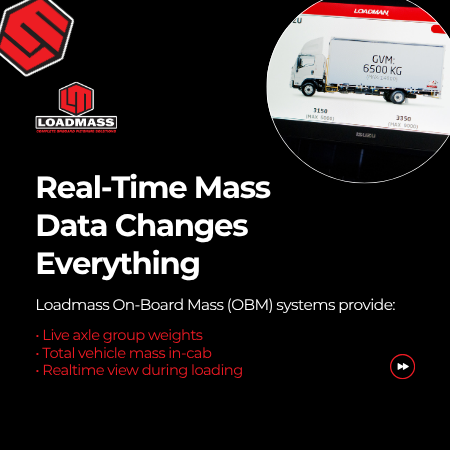
A wired on-board mass system is a permanently installed weighing solution that measures the load on each axle group of a vehicle in real time. Wired systems connect directly to the vehicle's suspension or axle sensors, delivering accurate, live mass readings to an in-cab display every time the vehicle moves.The driver sees their current weight total gross, per axle, or both at all times. No guesswork. No estimating. No driving to a weighbridge and hoping for the best.In Australia, the National Heavy Vehicle Regulator (NHVR) sets mass limits for all heavy vehicles operating on public roads. For government and council vehicles, which frequently carry heavy and variable loads, everything from green waste to road base maintaining compliance with those limits is both a legal obligation and a duty of care to the public and the driver.
The Case for Going Wired: Why Permanent Installation Matters
When evaluating OBM solutions, fleet managers are often tempted by lower-cost portable or Bluetooth-connected alternatives. But for fleet operations with daily, high-frequency use which describes virtually every council or government fleet, wired systems offer four critical advantages that portable solutions simply cannot match.
Accuracy you can rely on for compliance
Wired OBM systems are calibrated by certified technicians against known loads on your specific vehicle. This means the readings are not estimates; they are precise axle group weights that can be used to demonstrate regulatory compliance. Portable systems, by contrast, are more susceptible to drift, mounting position errors, and calibration decay over time. When a NHVR roadside check happens, you want data that holds up.
Always on, zero driver effort
A permanently installed system is active from the moment the vehicle starts. There is no equipment to attach, no pairing to perform, no app to open. For drivers who are focused on the job waste collection, road maintenance, civil works removing friction from the compliance process is essential. A system that requires setup is a system that gets skipped.
Durability in demanding environments
Government and council vehicles operate in harsh conditions: waste transfer stations, construction sites, unsealed roads, and all weather. Wired systems are engineered to live permanently in these environments. Sensors are protected, wiring is secured, and the in-cab display is mounted for continuous use. Portable equipment is not designed to be knocked around on the back of a garbage truck every day.An auditable compliance recordWhen integrated with telematics, a wired OBM system creates a timestamped record of every load event. For government fleets, this is increasingly important not just for NHVR compliance, but for internal governance, risk management, and insurance purposes. If an incident occurs, you have data.
The Real Cost of Not Investing
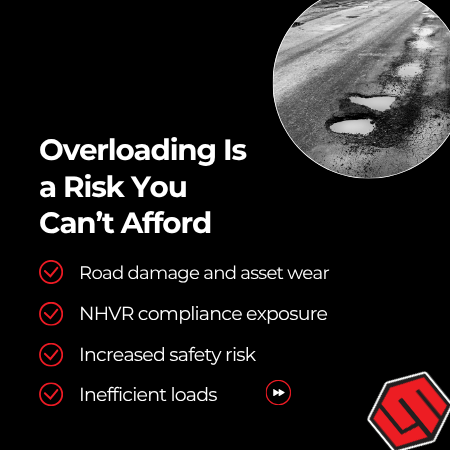
Fleet managers sometimes frame OBM investment as a cost. The more accurate framing is: what is the cost of not investing?NHVR infringement notices for mass breaches can reach tens of thousands of dollars per offence, and repeat breaches can result in fleet-wide audits or the suspension of operating conditions. Beyond fines, an overloaded vehicle that is involved in a crash creates significant council liability and the question of whether the vehicle was operating within its registered mass limits will be front and centre in any investigation.There is also the infrastructure cost. Overloaded vehicles cause disproportionate damage to road surfaces, bridges, and drainage infrastructure the very assets councils are responsible for maintaining. A fleet that regularly operates over mass limits is, in effect, accelerating the deterioration of the council's own road network.Then there is tyre and mechanical wear. Overloading accelerates tyre degradation, stresses brake systems, and shortens vehicle service life. For councils managing tight fleet replacement budgets, keeping vehicles within their rated mass limits is a straightforward way to extend asset life.
Which Government and Council Departments Use Wired OBM Systems?
Wired OBM solutions are not niche technology for heavy haulage specialists. They are actively deployed across a wide range of government and council operations. Here are the departments where they deliver the most value.
Waste and Resource Recovery
Waste collection vehicles are the highest-frequency use case for council OBM systems. A rear-loader or side-loader compacting general waste, recycling, or green waste can vary enormously in payload depending on the suburb, the day, and the season. Drivers need real-time feedback to know when the vehicle is approaching its gross vehicle mass (GVM) limit and supervisors need confidence that routes are being completed without compliance breaches. OBM systems allow waste fleets to run routes to capacity without overloading, improving collection efficiency and reducing the number of trips to the transfer station.
Roads and Infrastructure (Works and Civil)
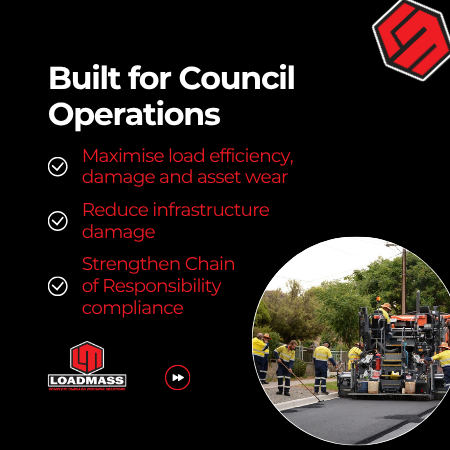
Council works vehicles carry road base, asphalt, crushed rock, sand, and other dense materials. These loads are heavy, variable, and often loaded by third-party plant operators who have no visibility of the receiving vehicle's mass limit. A tipper or combination truck fitted with an OBM system gives the operator and the loading crew instant feedback on when the vehicle is at capacity, preventing overloading at source rather than discovering it at the weighbridge.
Parks and Open Spaces
Larger councils operate dedicated parks fleets that carry mulch, soil, compost, turf, and landscaping materials. While individual loads may seem modest, the combination of material density and vehicle payload ratings means overloading is a genuine risk particularly when operators are moving material between sites and topping up loads in the field.
Water and Sewer / Utilities
Water and sewer maintenance crews frequently carry heavy pipe sections, fittings, water-filled equipment, and excavated spoil on service vehicles. OBM systems help utilities fleet managers ensure that service trucks which may be driven by tradespeople rather than professional truck drivers remain within legal mass limits throughout the working day.
Emergency Management and SES
Larger emergency management fleets, including those operated by State Emergency Service units, carry pumps, generators, rescue equipment, and bulk supplies during activations. The combination of diverse, heavy equipment and the urgency of emergency response creates a genuine overloading risk. OBM systems provide a passive safety check that does not interfere with operational priorities.
Airports and Port Authorities
Government-operated airports and ports manage specialised ground support vehicles and cargo-handling equipment that must comply with both road mass limits and airfield or wharf pavement ratings. OBM systems are often mandated as part of operating conditions in these environments.
State and Local Road Authorities
Road maintenance contractors and in-house road crews operating on behalf of road authorities carry dense materials and often work on roads with reduced mass limits particularly on low-volume rural roads with posted mass management conditions. OBM systems are an essential compliance tool in these environments.
What to Look for in a Wired OBM System for a Government Fleet
Not all OBM systems are equal, and government procurement decisions benefit from a clear evaluation framework.
Key criteria include:
NHVR type approval — the system must be approved under the NHVR's OBM guidelines if it is to be used as a compliance tool for mass management accreditation.
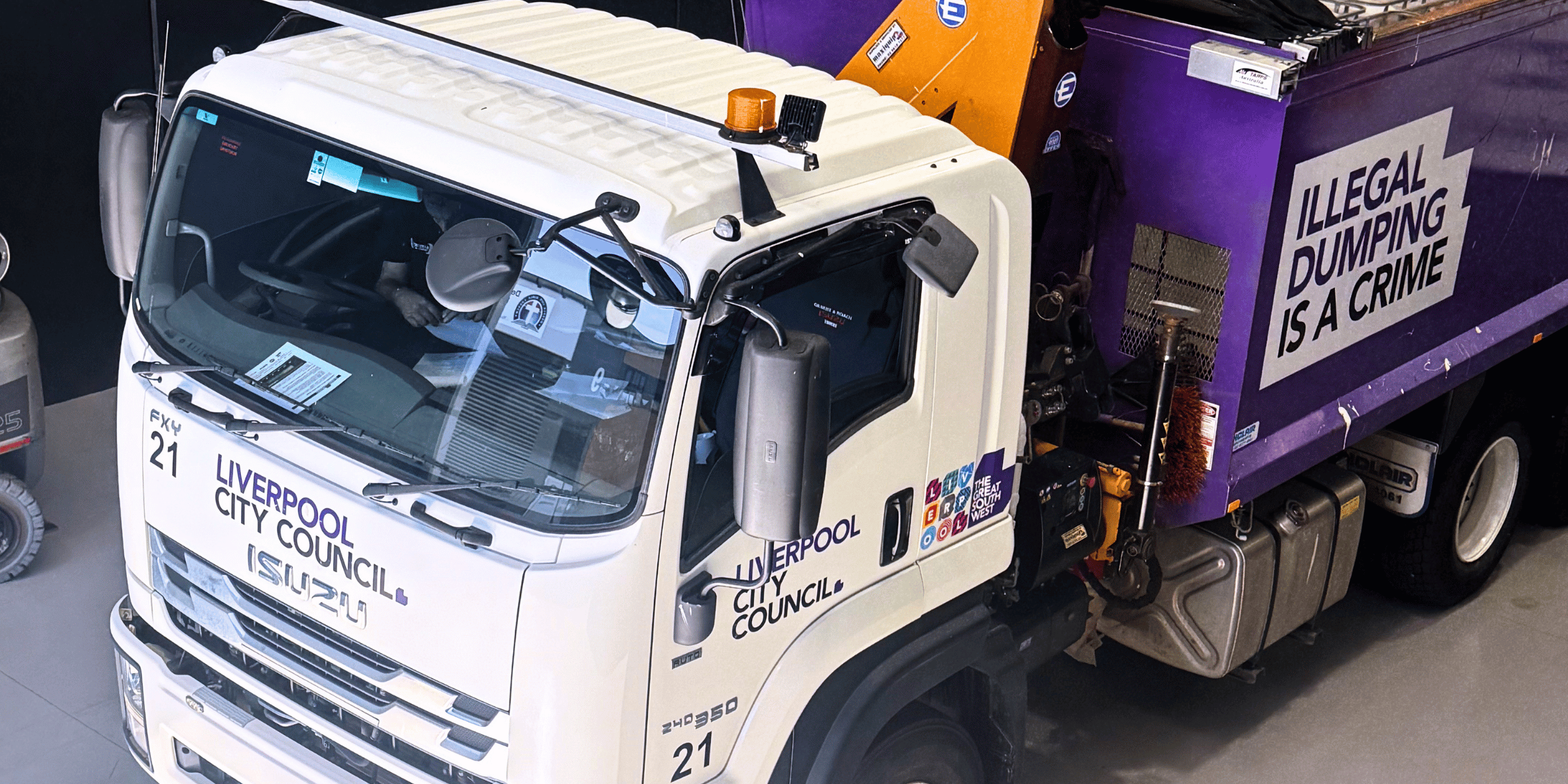
Compatibility with your fleet mix — councils typically operate vehicles from multiple manufacturers across multiple vehicle classes. A system that can be installed on Isuzu cab-overs, Hino tippers, Mercedes-Benz Actros combinations, and everything in between simplifies procurement and standardises the driver experience.
In-cab display clarity — drivers need to read their mass data at a glance, in direct sunlight, from the cab seat. Display quality matters.
Telematics integration — if your fleet already uses a telematics platform (Teletrac Navman, Mix Telematics, Webfleet, or similar), look for an OBM system that can feed mass data into that platform for centralised reporting.
Certified installation and calibration — the accuracy of the system depends entirely on the quality of the installation. Insist on certified technicians, documented calibration records, and a clear service and support arrangement.
National service capability — government fleets often operate across multiple depots and regions. A supplier with national installation and service capability avoids the cost and complexity of managing multiple providers.
Loadmass: Built for Australian Government and Council Fleets
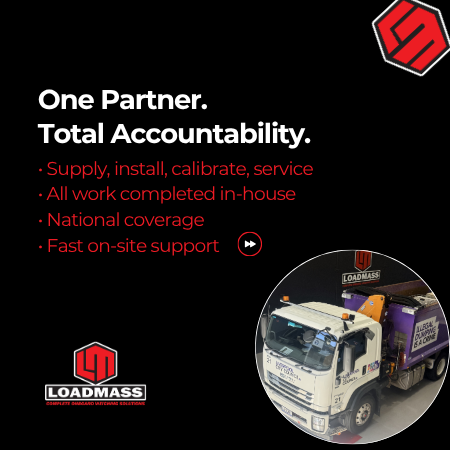
Loadmass delivers wired OBM solutions specifically engineered for the compliance, safety, and operational demands of Australian government and council fleets. Every installation is completed by certified Loadmass technicians, no third-party contractors ensuring consistent quality and a single point of accountability for your entire fleet.
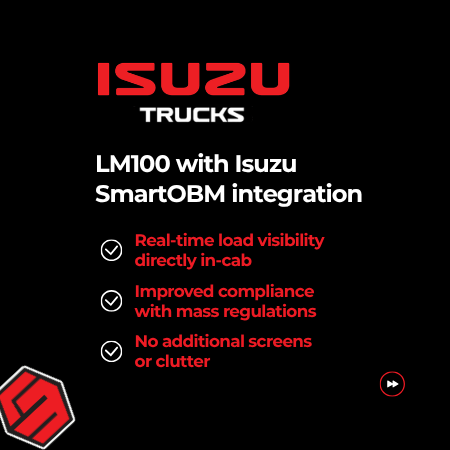
The LM100 is the only OBM system fully integrated with Isuzu's infotainment platform, delivering real-time mass data through the in-cab screen drivers already use ideal for councils running Isuzu-heavy waste and works fleets.
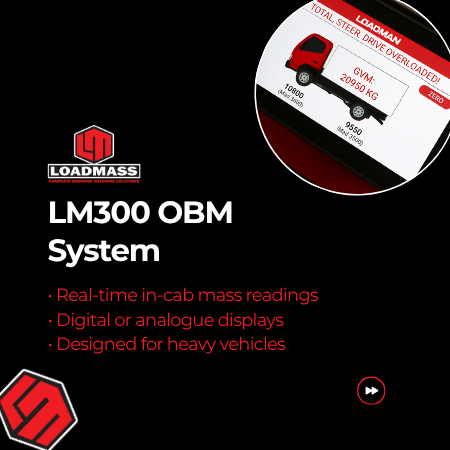
The LM300 is built for rigid trucks and multi-combination vehicles across all makes and models, delivering precise axle group readings via a purpose-built in-cab display. It is engineered for the demands of daily council fleet operations and supports integration with leading telematics platforms.
Loadmass covers the full lifecycle consultation and system design, mobile on-site installation anywhere in Australia, professional calibration, and ongoing maintenance and support.